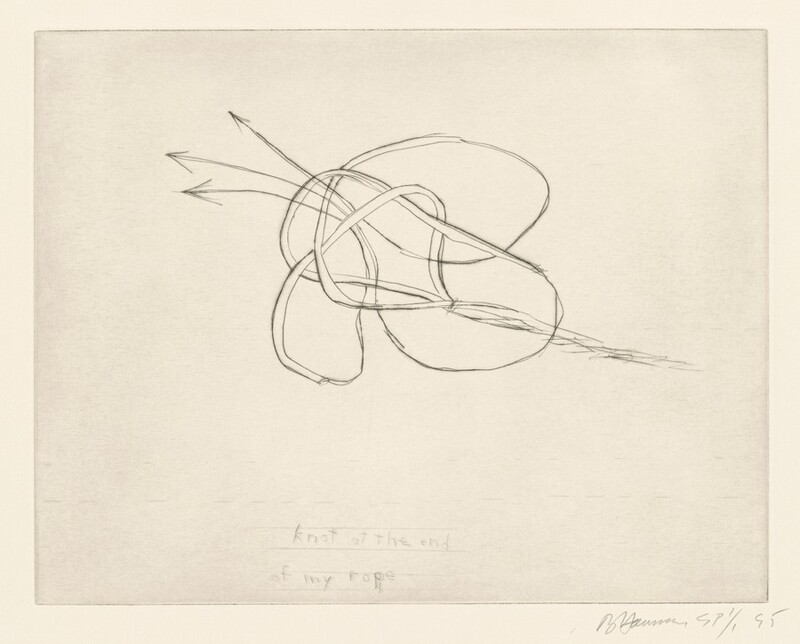
What will be will be. And so I think there's a sort of beauty to letting go. Not in some superficial sense, calling simply the aphorism a cliché and leaving it at that, but realising that exactly because of how cliché it sounds, we're at risk of handwaving it, since that's easier than admitting that the truth of the matter is not far off and distant, but present-at-hand, right there. Because what will be will be. Perhaps in some logical sense, we might say that really, nothing is said. Except of course, in doing so, we'd deny its being said.
A dear friend has repeated the phrase to me countless times. Now I repeat it: What will be will be. I tell it to myself, but invite you to take part in this movement of language, too. Because, I think, what we are inclined to think, thinking of the aphorism, is that really, it's the utterance of some fatalistic surrender to the forces of the outside world, outside meaning here "outside of us". Surely that seems to be what Wikipedia wants you to think. But it also shows that in the expression, more is said than is heard, and what is said is a question that we ask have to ourselves: So what?
The point is, I think, that the so-called 'cheerful fatalism' (as the omnipotent Wikipedia dubs it) isn't as much a conclusion as a prerequisite for understanding the expression, or utterance, in the first place. Because what will be is still in the dark. And matter of fact is that, if we genuinely do believe that we have the power to affect at the very least some change, then what will is not a matter of fatalistic determination, but, simply put, the sum of its causes - among which we are one. But what's also not said is that you get to decide what will be. And so I think that really, what we are trying to say is to let go. Not of the future, not of the past, and surely not of the present - but of a very particular idea, namely that the future is only in our hands. What will be will be. Does that mean I must blindly accept and be happy with whatever the outcome is? Surely that couldn't be the case, most of all in those cases where it seems to clear that really, I am the only one responsible for that potential outcome. Reality tells us, very plainly, that unless I decide to eat dinner today, chances are I won't be eating dinner. I get to have a say, but truthfully, so do others - and most of the time, others have a lot more of a say than I do. Sometimes, it seems, I do get to decide - but most of the times, others decide for me.
Which of course is only a part of the story, and one which is likely to seem simply all too sad. And left unasked is the question of the Others in the first place. And so there's a great deal of truth, and truthfully, a certain type of salvation, to be found in the understanding that rather focusing on the fact that I don't get to decide (but others do), that among the things I get to decide is whether really the world has to be a binary "Me" and "the Others", this core assumption of the foregoing thought, or if instead, the world is understood as a "We".
And so I repeat, I think there's a sort of beauty in letting go. Not because that I'm holding on to isn't something that I want to keep, but because it's not the sort of thing, really, that one person can and should carry, but right now I'm the only doing so. What will be will be - whether it stays afloat or falls, that will be its future. And if I let go, only God knows what will happen. But still I get to have a say.